
Sulfated Slag Cement
Can you build with it?
We believe our role is not simply to respond to changes in the concrete industry. We want to help the industry test, understand, and prepare for them.
That is exactly what happened at Point Edwards Place in Woodway, Washington.
From an Idea to a Real Concrete Pour
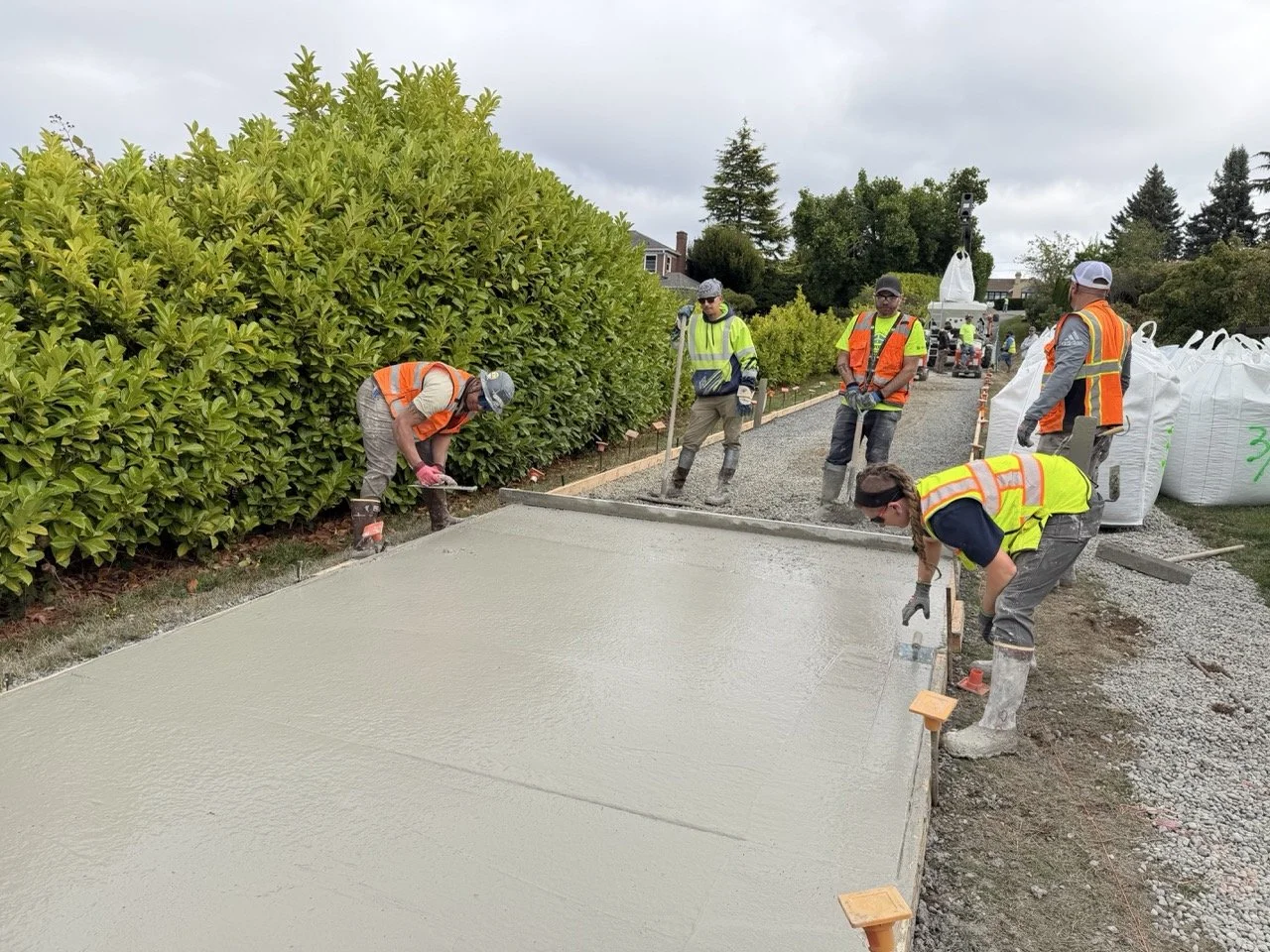
At the personal residence of David Landrey, a team that included OPCMIA Local 528 cement masons, GLY Construction and LaRusso Construction came together to place an experimental lower-carbon concrete under actual jobsite conditions.
David Landrey made an important personal investment by providing a real project where the material could move beyond discussion and into the field.
The Phase I project involved approximately 30 cubic yards of 4,000 PSI concrete with Sulfated Slag Cement from Amrize.
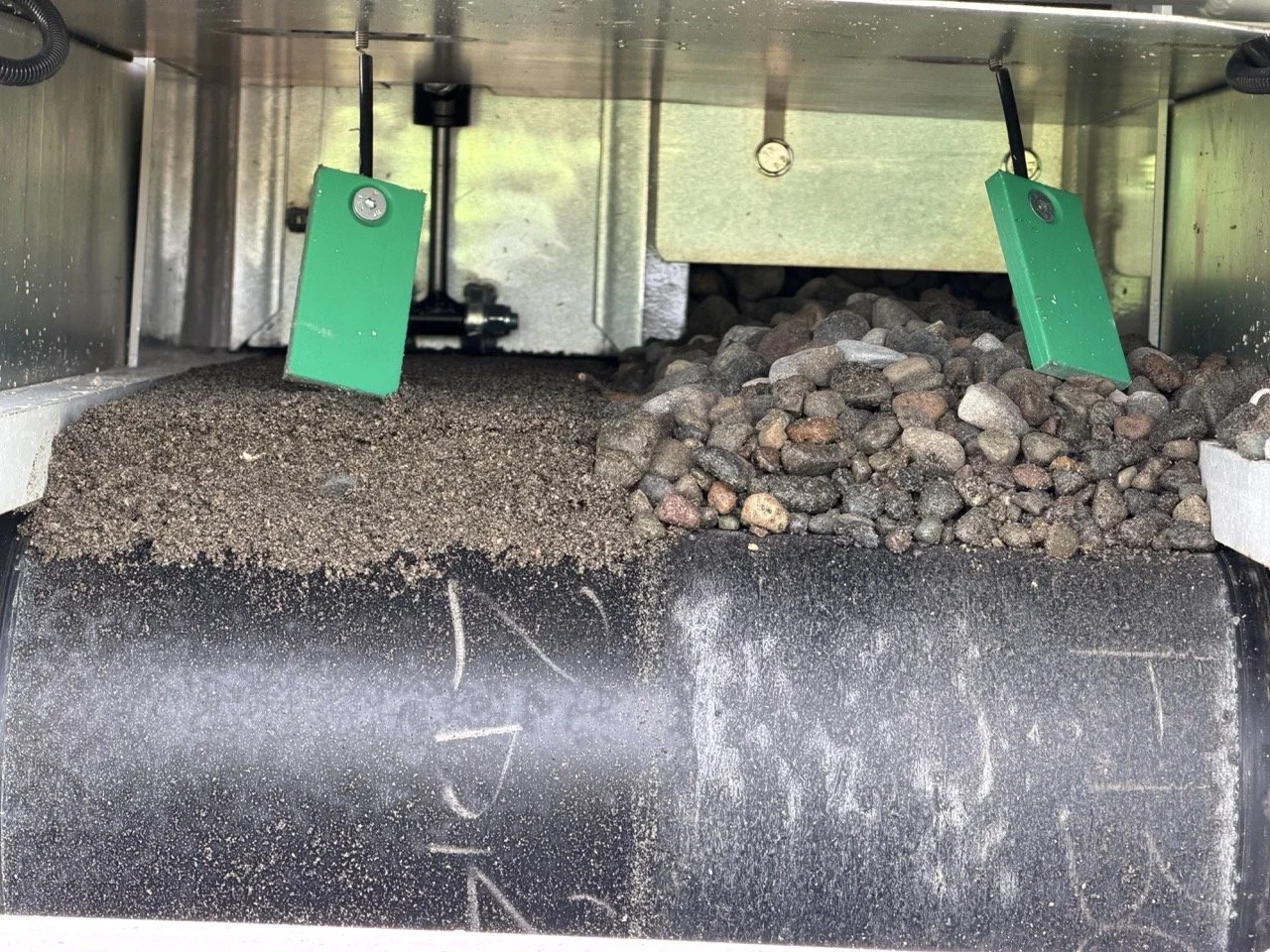
Instead of relying on a conventional ready-mix approach, the concrete was produced on site with a mobile batch plant. The mix used Lafarge NewCem slag cement with a relatively small Portland cement component, along with locally sourced aggregates. The slab design also substituted engineered synthetic macro fibers for conventional steel reinforcement.
This gave the project team something far more valuable than a classroom demonstration: a chance to see how an alternative concrete system actually behaves when people have to batch it, move it, place it, finish it and test it.
Putting New Materials in the Hands of the Craft
New concrete technology cannot succeed on specifications and laboratory data alone.
Eventually, somebody has to build with it.
The Point Edwards project also generated measurable test data. A third-party concrete modulus-of-rupture test performed under ASTM C78 recorded 430 PSI at 14 days for a sample from the October 2, 2026 placement. The report identifies the material as an on-site batch and records a 7-inch slump, 65°F concrete temperature and placement by concrete buggy.
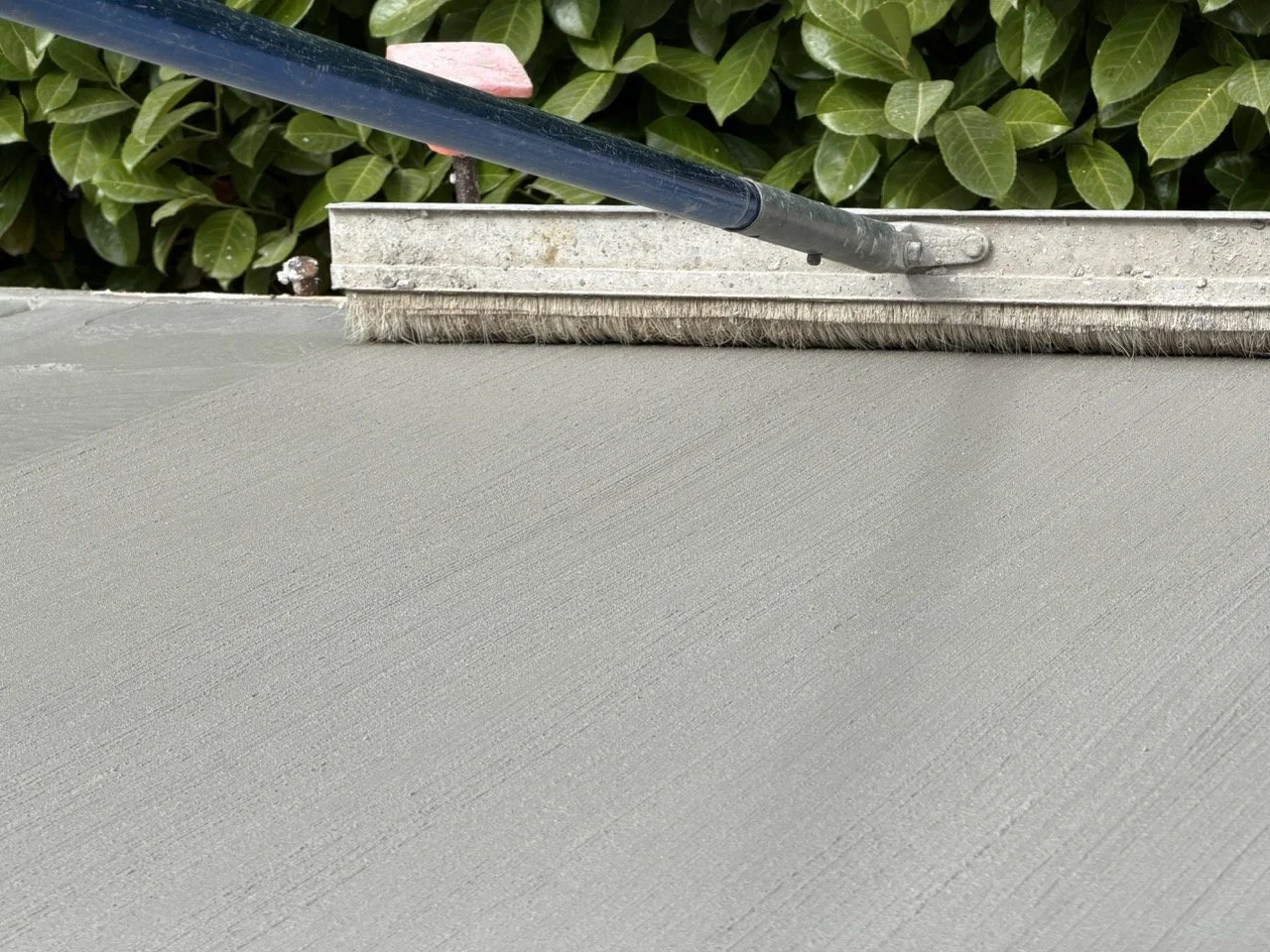
Follow-up observations reported that the concrete had no cracking at that stage and was showing performance characteristics that warranted continued study. The project team emphasized the importance of collecting verifiable baseline data instead of relying only on assumptions about how a lower-carbon mix should perform.
Measuring the Environmental Impact
The project was also designed to look beyond whether the concrete could simply be placed successfully.
A draft carbon-accounting analysis for Point Edwards examined the material, transportation, batching, reinforcement and placement operations associated with the 30-cubic-yard pour. That analysis calculated an estimated 1,710.95 kilograms of carbon-dioxide-equivalent emissions for the site-batched concrete and fiber-reinforcement system, compared with a modeled conventional baseline of 8,065 kilograms. The draft therefore estimates an overall reduction of approximately 78.8 percent for the system evaluated.
Those numbers are meaningful, but for Local 528, the larger lesson is not about claiming that one mix has solved the industry's environmental challenges.
It is about creating a place where ideas can be tested honestly.
Before an alternative material can be widely adopted, contractors and owners need confidence that it can perform. Engineers need data. Manufacturers need field feedback. Public agencies need credible information. And workers need the training and experience necessary to install it correctly.
Local 528 can help bring those pieces together.